Star Blizzard QR Phishing
Star Blizzard threat actors embed malicious QR codes in phishing documents that exploits WhatsApp's device-linking feature, allowing attackers to monitor conversations and exfiltrate data. These weaponized QR codes bypass email security filters and exploit users' trust in QR technology.
Defend With SquareX
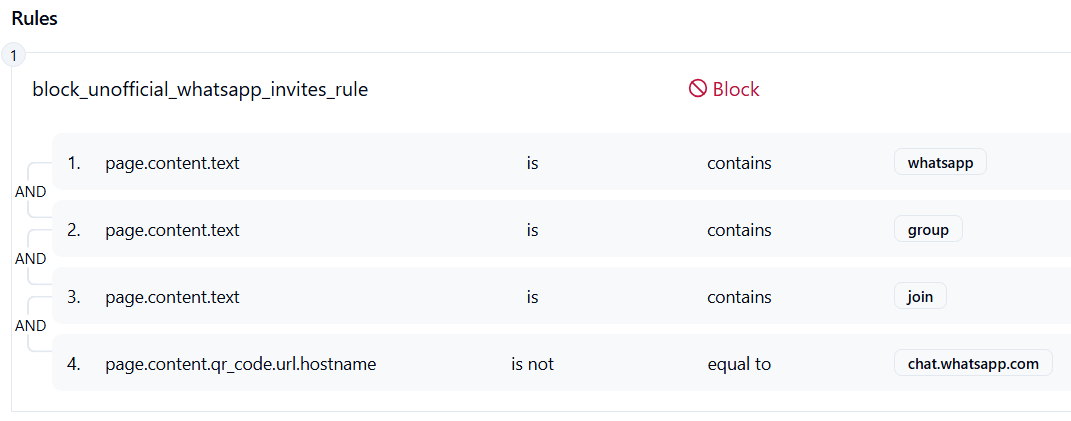
Create a site content policy to Block unofficial WhatsApp invites.
Affected Companies:


Us Department Of Energy
Us Government Officials & Nato Diplomats
Example Policy
Follow These Steps
- Click on Launch Attack Simulation button
- With SQRX enabled, qr will be blocked
Details
In mid-November 2024, Microsoft Threat Intelligence observed the Russian state-aligned threat actor Star Blizzard (a.k.a. SEABORGIUM, Callisto Group, TA446) using a new phishing technique.
Instead of their traditional spear-phishing lures, Star Blizzard embedded weaponized QR codes in phishing documents to exploit WhatsApp’s device-linking feature.
The phishing emails impersonated US government officials, offering recipients the opportunity to join a WhatsApp group related to Ukraine NGOs.
The initial email contained a broken QR code, designed to elicit a response.
A follow-up email then delivered a shortened link that redirected to a fake WhatsApp Web page.
Victims scanning the QR code effectively linked their WhatsApp account to the attacker’s device, enabling Star Blizzard to monitor conversations and exfiltrate data.
Impact
- Account Takeover: Successful scans of the malicious QR code gave Star Blizzard persistent access to victims’ WhatsApp accounts.
- Message Exfiltration: Attackers could silently monitor conversations and export entire chat histories using WhatsApp Web plugins.
- Impersonation & Social Engineering: Compromised WhatsApp accounts could be misused to impersonate trusted contacts, spread disinformation, or deliver follow-on phishing payloads.
- Intelligence Collection: Victims included diplomats, government officials, defense researchers, and NGOs supporting Ukraine — providing attackers access to sensitive political and operational discussions.
Indicator of Compromise (IOC)
Emails impersonating government or diplomatic officials.
Emails containing shortened links
QR codes directing users to a WhatsApp Web/device-linking page.
Check for WhatsApp linking attempts originating from suspicious domains or after phishing email engagement.