Isolate Risky Sites
Newly registered domains and typosquatted sites represent high-risk destinations that frequently host zero-day exploits, phishing campaigns, or malware before being detected by traditional security tools.
Defend With SquareX
Create a site visit policy to Isolate risky sites.
Affected Companies:



Usps
Facebook
Github Actions
Linkedln
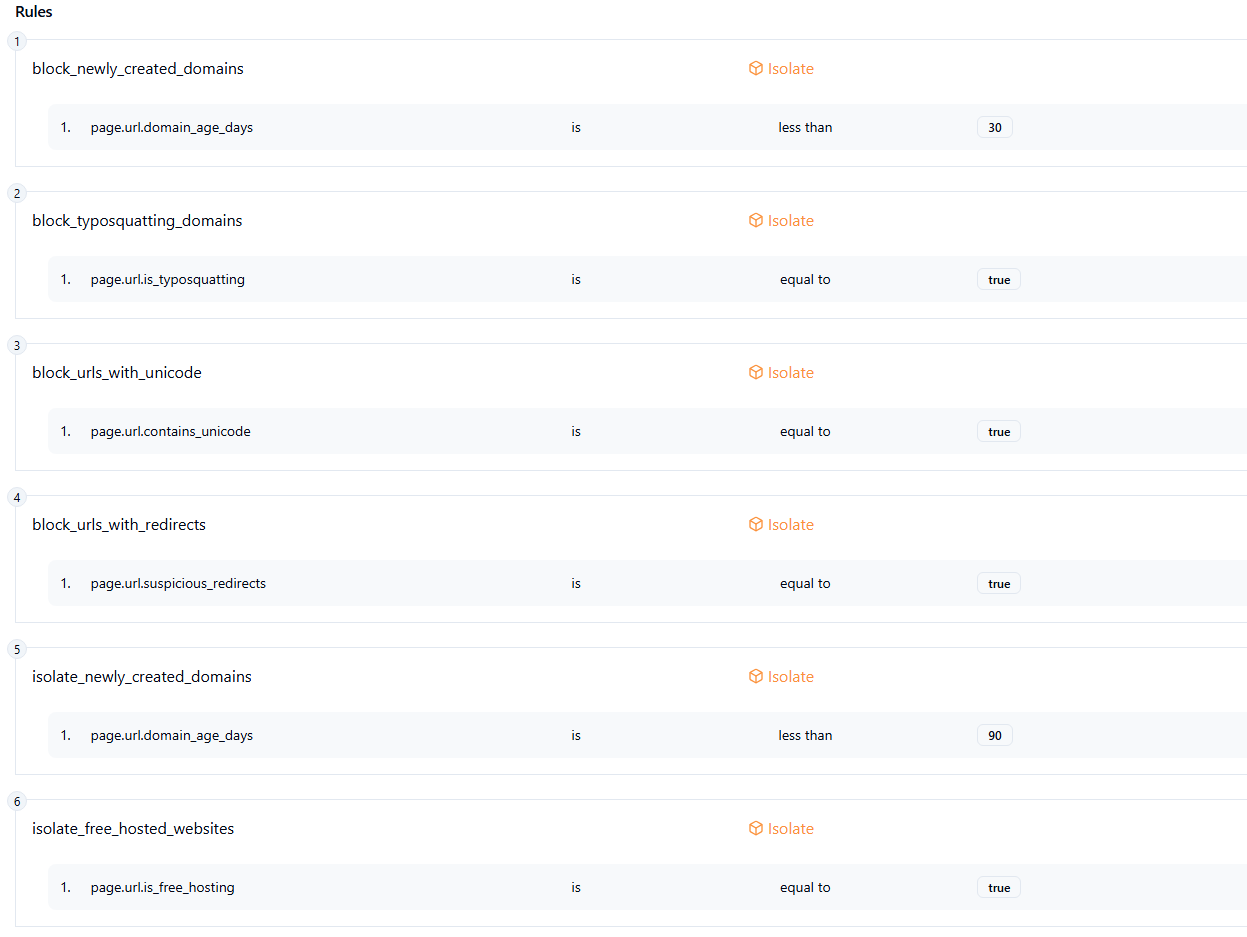
Example Policy
Follow These Steps
- Click on Launch Attack Simulation button
- With SQRX enabled, website will be opened in Disposable browser
Details
Cybercriminals leverage newly registered domains and typosquatted websites to create high-risk destinations that frequently host zero-day exploits, phishing campaigns, credential harvesting operations, and malware distribution before being detected and blocked by traditional security tools. Newly registered domains provide attackers with clean reputations that bypass URL filtering and security solutions, while typosquatted sites exploit user typing errors and brand confusion to redirect victims to malicious content. These risky sites are created through automated domain generation algorithms that register thousands of domains daily, typosquatting campaigns that register domains with slight variations of popular brands and services, internationalized domain names that use similar-looking characters from different alphabets to impersonate legitimate sites. Attackers strategically time these campaigns around major events, product launches, or seasonal trends to maximize victim engagement and credential harvesting success rates.
Impact
Zero-Day Exploit Distribution: Newly registered domains serve as launch points for zero-day exploits targeting browser vulnerabilities, enabling attackers to compromise victim systems through drive-by downloads before security vendors can develop signatures or protective measures.
Large-Scale Phishing Operations: Typosquatted domains mimicking popular services like banking portals, social media platforms, and e-commerce sites can harvest thousands of user credentials daily before detection, enabling widespread account takeovers and identity theft affecting millions of users.
Malware Distribution Networks: Fresh domains with clean reputations bypass security filters to distribute ransomware, banking trojans, cryptocurrency miners, and remote access tools, allowing attackers to establish footholds in corporate networks and critical infrastructure systems.
Brand Impersonation and Fraud: Typosquatted sites impersonating legitimate companies enable business email compromise attacks, invoice fraud, and customer deception schemes, resulting in significant financial losses and reputational damage to targeted organizations.
Indicator of Compromise (IOC)
Domain Registration Patterns: Domains registered within the last 30-90 days with suspicious registrar histories, bulk domain registrations from single entities or privacy-protected WHOIS records, domains using character substitution to mimic legitimate brands, internationalized domain names using homograph attacks with similar-looking characters from different alphabets.
Typosquatting Characteristics: Domains with single character substitutions of popular brands, websites using common typing errors like transposed letters or missing characters. Domains adding prefixes or suffixes to legitimate brand names and sites using subdomain combinations to appear legitimate.