Block High Risk Google OAuth Scopes
Attackers manipulate OAuth authentication flows to gain unauthorized access to cloud services, email accounts, file storage systems, and other online platforms. They exploit users' trust in OAuth authorization prompts to bypass security measures and access sensitive data across multiple services. This attack vector is particularly dangerous because OAuth requests often appear legitimate, while actually requesting excessive permissions that grant attackers broad access to user accounts, personal information, business documents, and integrated third-party applications.
Defend With SquareX
Create an identity policy to Block high risk Google OAuth scopes.
Affected Companies:



Google
Meta
Microsoft
Example Policy
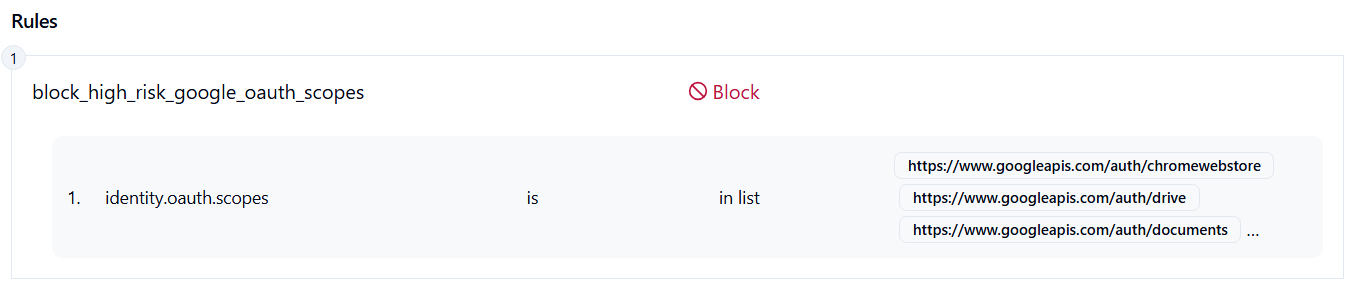
Follow These Steps
- Click on Launch Attack Simulation button
- Click on Try InboxIQ Drive button
- With SQRX enabled, Authorization will get blocked
Details
Attackers exploit legitimate OAuth flows by sneaking in excessive permissions (e.g., modify files in Google Drive, send emails on behalf of the user). These broad scopes are bundled into routine-looking consent prompts, tricking users into granting far more access than necessary. Once approved, the attacker’s app gets valid OAuth tokens, allowing it to manipulate files, exfiltrate data, or impersonate the user across services, all while bypassing normal password-based defenses.
Impact
This abuse lets adversaries silently escalate privileges in cloud environments. They can encrypt, delete, or steal sensitive files, send phishing emails from trusted accounts, and deploy malicious third-party apps or service accounts for persistence. Since the activity originates from valid tokens, traditional security tools often miss it, giving attackers long-term access to corporate SaaS platforms.
Indicator of Compromise (IOC)
Watch for unusual OAuth behavior: approvals of high-risk scopes like drive.file, drive.readwrite, or gmail.modify outside approved policies; new or unauthorized apps in your OAuth registry requesting broad scopes; suspicious consent log patterns (e.g., multiple grants by a single user in a short timeframe); spikes in write/delete API activity in Google Drive or Gmail from odd IP ranges or service accounts; and the appearance of third-party app credentials in token logs without a clear business need.