Block Extension based on Community Evaluations
Extensions with poor ratings, negative reviews, or suspicious community feedback often contain malware, privacy violations, or other security risks that can compromise user data and corporate systems. Blocking extensions based on these helps prevent installation of potentially malicious add-ons before they can access sensitive information or compromise browser security.
Defend With SquareX
Create a browser extension policy to Block Extensions with poor ratings, negative reviews and less users.
Affected Companies:

Internxt Vpn
Blogs:
Researchers Bypass Chrome and Firefox Security: Malicious Extensions with Minimal Permissions Evade Detection - ArXiv
Over 50% of Browser Extensions Pose Security Risks: CrowdStrike Launches Community-Based Detection System - CrowdStrike
2.6 Million Users Affected: 35+ Browser Extensions Compromised in Identity Theft Campaign - BleepingComputer
Example Policy
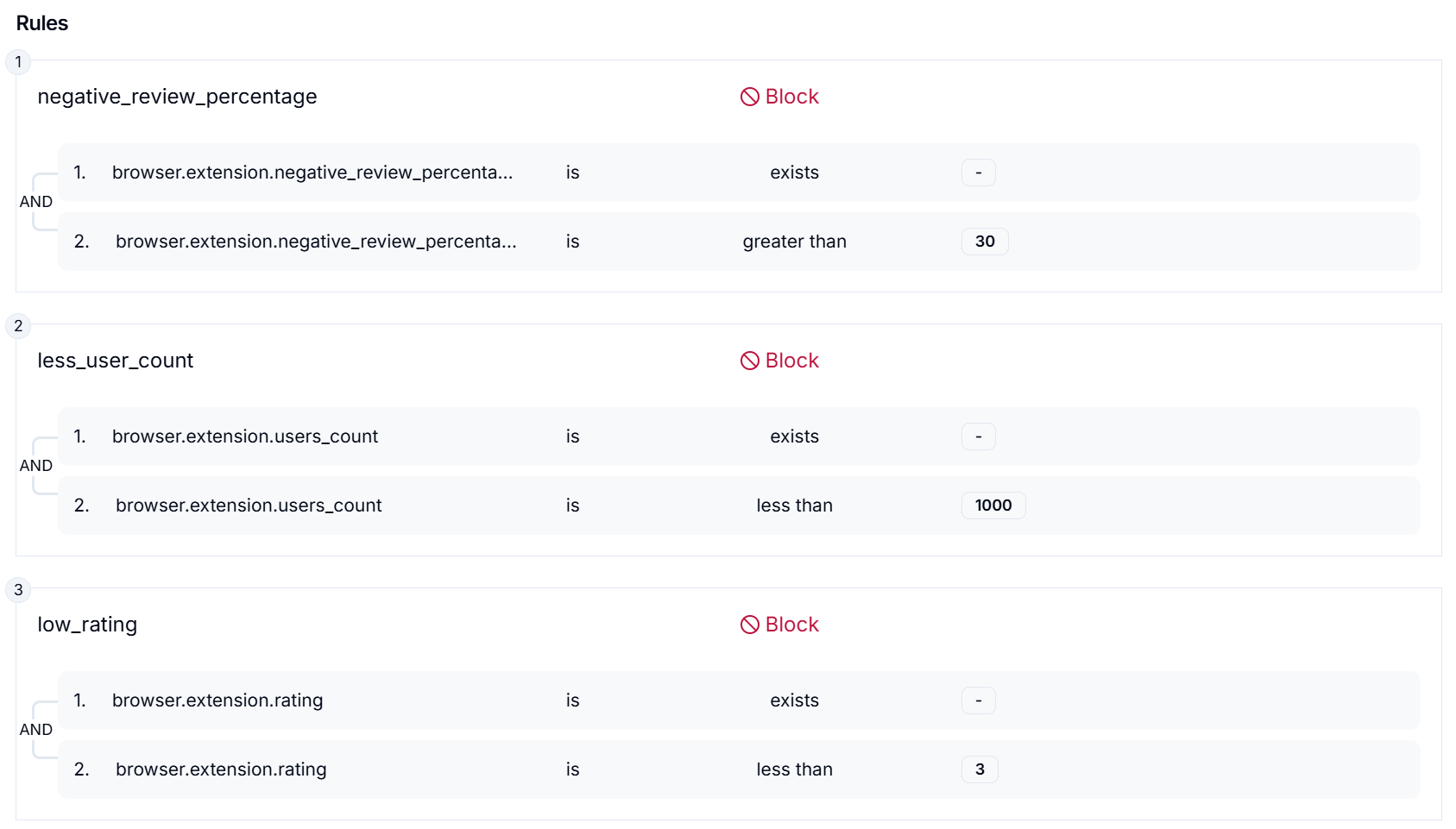
Follow These Steps
- Click the "Launch Attack Simulation" button.
- The extension will be blocked by Sqrx
Details
Browser extensions with poor ratings and negative community feedback often carry significant risks. They may include malicious code, hidden spyware, or engage in aggressive data collection practices without user consent. Even if not overtly malicious, poorly designed or untrustworthy extensions can weaken browser performance, introduce vulnerabilities, or serve as entry points for attackers. Community reviews provide early warning signs of these threats, helping identify extensions that should be treated with caution.
Impact
Once installed, compromised extensions can exfiltrate credentials and authentication tokens, leading to session hijacking and account takeover. They also enable large-scale data theft, including PII, browsing history, and financial details. Some can even activate webcams or microphones, creating severe privacy risks. Beyond data loss, these extensions distort web traffic with ad fraud, inflate social-media metrics, or join botnets for DDoS attacks, exposing individuals and organizations to both financial and reputational harm.
Indicator of Compromise (IOC)
Check for unknown or suspicious extension IDs in Chrome/Firefox (e.g., kaphipbedfkgogpnainaoemcjanplfbf), especially those requesting high-risk permissions (cookies, history, scripting, tabs) without a valid business reason. Watch for unexpected network traffic to remote servers after extension installs or updates, particularly requests involving cookie exfiltration or screenshot uploads. Be alert for extensions with obfuscated code or delayed functionality that mismatch declared permissions versus actual behaviors.